

On this page
We've been training English teachers in Barcelona since 2012, and we've helped more than 1,000 of them find work here. This guide is everything we tell people in their first contact with us: if you're eligible, the visas, what you'll earn, when schools hire and what the first few months are really like.
Start with your passport
| Your passport | Can you work in Spain? | The usual route | Read more |
|---|---|---|---|
| European Union | Yes, immediately | Get qualified, register on arrival, apply to schools | EU citizens |
| American | With the right visa | A student visa with a Spanish course, or the language assistant programme | US citizens |
| British | With the right visa (since Brexit, and there's no youth mobility scheme with Spain yet) | A student visa with a Spanish course, or the language assistant programme | UK citizens |
| Canadian | With the right visa | A student visa with a Spanish course, or a youth mobility visa if you're 18 to 35 and meet its requirements | Student visas, youth mobility visas |
| Australian | With the right visa | A student visa with a Spanish course, or a working holiday visa if you're 18 to 30 and meet its requirements | Student visas, working holiday visas |
| New Zealander | With the right visa | A student visa with a Spanish course, or a working holiday visa if you're 18 to 30 and meet its requirements | Student visas, working holiday visas |
| Any other nationality | With the right visa | A student visa with a Spanish course | Student visas |
Whatever your passport, most private language schools will expect a recognised teaching qualification such as the Trinity CertTESOL or the Cambridge CELTA. More on that below.
What you need
People often assume there's a long list of requirements, but there are fewer than you think.
| Requirement | Do you need it? | What it depends on |
|---|---|---|
| A university degree | Not for most private schools | The language assistant programme needs a degree, or at least two years of university study. International schools usually want a teaching degree. Private academies rarely ask. |
| A TEFL qualification | In practice, yes | It isn't a legal requirement, but almost every academy in Barcelona asks for one. A 4-week, 120-hour-plus course with assessed teaching practice, such as the Trinity CertTESOL or CELTA, is what schools look for. |
| To be a native speaker | No | Schools want a very high level of English (around C2) and the ability to teach it. Between 2024 and 2026, about one in seven of our trainees came from countries where English isn't the main language. |
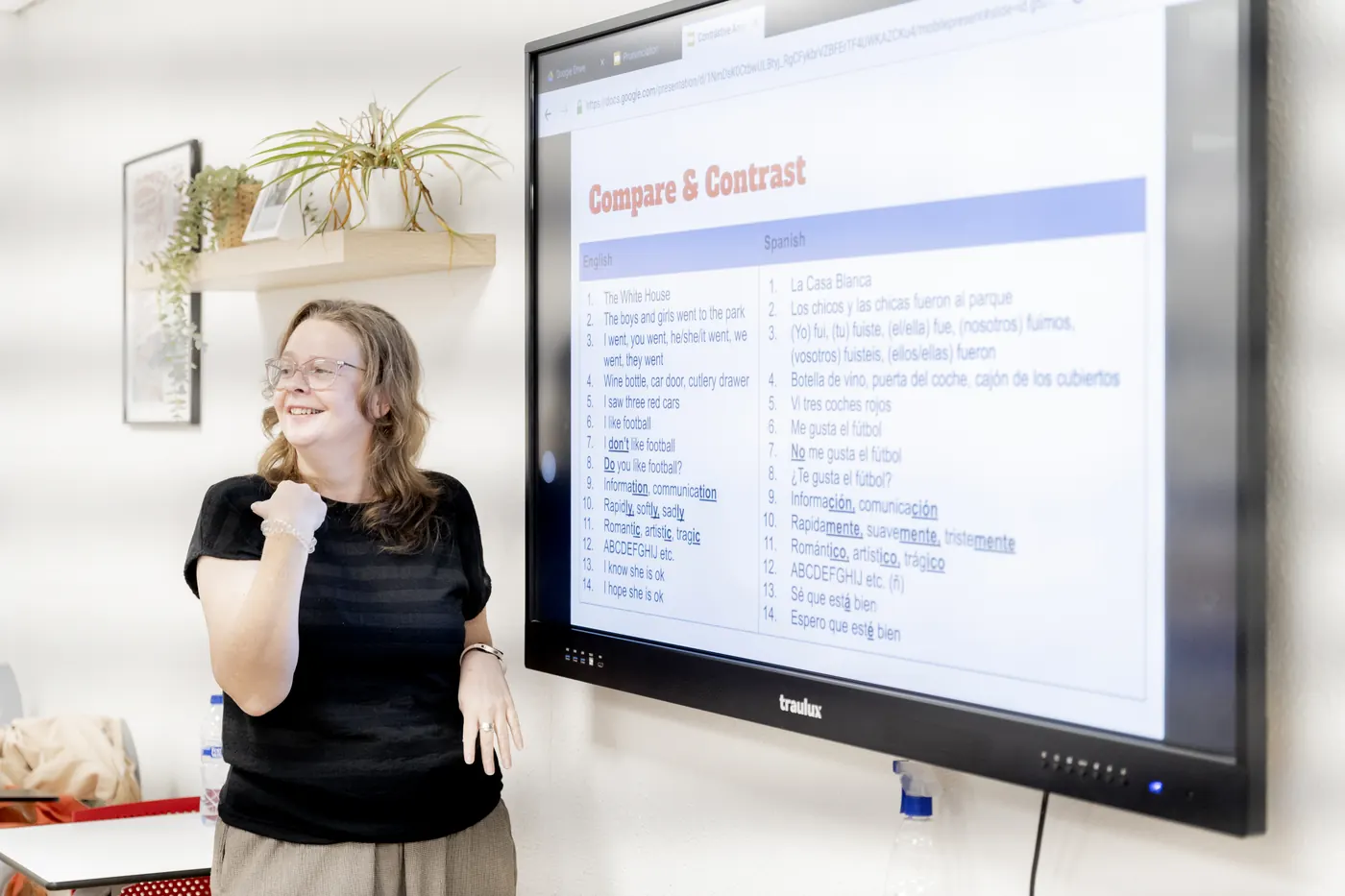
| To speak Spanish | No | No. Most academy lessons are taught in English. Some Spanish makes daily life and paperwork much easier, which is why our visa programmes include Spanish classes. |
| Teaching experience | No | Most of our trainees have never taught before. Teaching practice with real students is built into the course. |
| A particular age | No | Our trainees range from recent graduates to career changers. Some visas have age limits (see below). |
Typical jobs teaching English in Spain
Private language academies
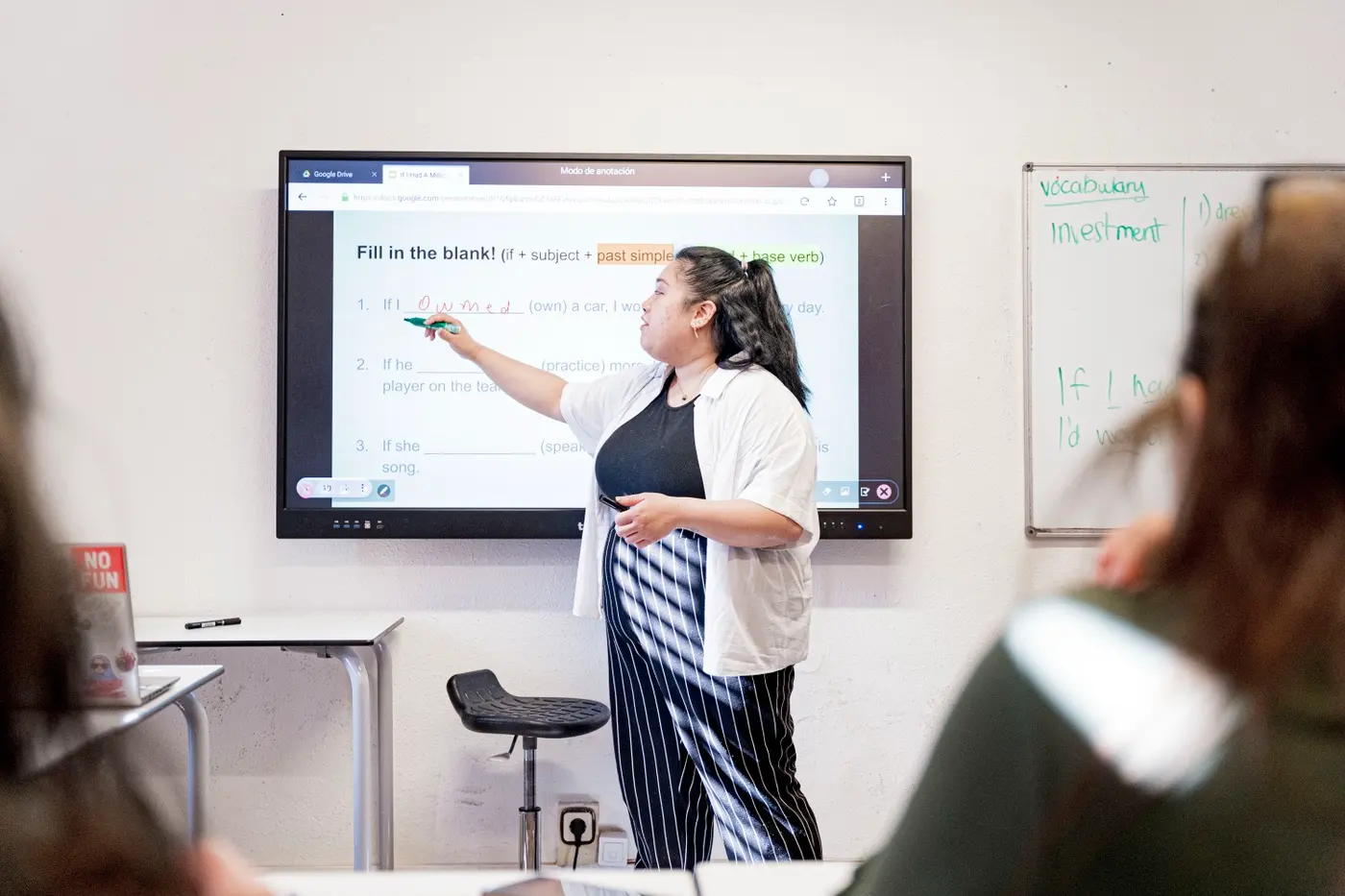
This is where most new teachers start, and it's where most of our graduates work. Academies teach children, teenagers and adults after school and work, so the hours are mostly afternoons and evenings, Monday to Thursday, with some Friday and Saturday morning classes.
A typical first offer is 11 to 20 hours of teaching a week. Academies hire most heavily in September and October, with a second wave in January and smaller ones through the year (see when to go).

Language assistant programmes (NALCAP and Auxiliares de Conversación)
Spain's Ministry of Education places native English speakers in state schools as language assistants for the school year. In 2026-27, assistants work 14 hours a week for a grant of €800 a month. A few regions ask for up to 16 hours and pay more (Extremadura has paid €935 for 16 hours in recent years). The year runs from 1 November 2026 to 31 May 2027.
It's a good route for Americans and Canadians in particular, because the programme comes with its own visa. It has some catches. You need a degree, or to be at least in your second year at university, and new applicants must be under 45. You apply many months ahead, with no say over which town you're placed in. Americans and Canadians apply to the Ministry directly; if you're from the UK, you apply through the British Council (opens in a new tab) instead.
The programme has also been through a difficult period. For 2026-27, Madrid, Andalusia, Galicia and Murcia are not taking part in the Ministry programme, and some of the private organisations that used to place assistants, such as ConversaSpain, are not running this year. The next application window has not been announced yet; the last one before this year's late call ran from February to March. Always check the latest position on the Ministry of Education's page for language assistants (opens in a new tab) before you plan around it.
Private classes
One-to-one and small-group classes pay better per hour than academies, typically €20 to €25 an hour in Barcelona. Most teachers add a few private students once they've settled in, rather than relying on them from the start, because private work is irregular and students cancel or go on holiday.
Summer camps
English summer camps hire teachers and monitors for July and August, and they recruit early, usually from February to March. It's seasonal work, but it's a useful bridge if you arrive in spring.
International and bilingual schools
These pay the most and offer full-time contracts, but they usually want a teaching degree or qualified teacher status from your home country, plus classroom experience. For most people coming to Spain for the first time, they're a later step rather than a starting point.
Where in Spain to teach
Most of this guide uses Barcelona figures, because that's where we train teachers and where most of our graduates work. But English is taught all over Spain, and the right city depends on what matters most to you: the number of jobs, the rent or the way of life.
| City | Room in a shared flat, a month | Typical pay in English teaching ads | Language assistant programme, 2026-27 |
|---|---|---|---|
| Barcelona | about €630 | about €18 an hour | Yes |
| Madrid | about €630 | about €15 an hour | Runs its own programme, outside the Ministry's |
| Valencia | about €470 | about €13 an hour | Yes |
| Seville | about €430 | about €14 an hour | No, Andalusia isn't taking part |
| Málaga | about €510 | about €15 an hour | No, Andalusia isn't taking part |
| Smaller cities | from about €340 (Granada) to €620 (Bilbao) | Too little data to compare | Depends on the region |
Barcelona. One of Spain's two biggest markets for English teachers, and one of the most international cities in Europe. Rooms are among the most expensive in the country. State schools teach mainly in Catalan, but English lessons are taught in English, and academies work in English and Spanish. Our insider's guide to teaching English in Barcelona covers the city in more detail.
Madrid. The biggest job market by some distance: when we checked in October 2026 there were roughly twice as many English teaching ads as in Barcelona, at similar rents. Advertised pay is a little lower. Madrid has left the Ministry's language assistant programme and runs its own (opens in a new tab), with more than 1,460 assistants in 2026-27 hired through a contractor. How to apply hadn't been published when we checked in October 2026.
Valencia. Cheaper rooms, and many more of them on the market than a year ago. There are fewer teaching jobs than in Madrid or Barcelona, and advertised pay is lower.
Seville. The cheapest of the big cities for rooms, with a smaller job market. Summers are very hot, with average highs of around 36°C in July and August. Andalusia isn't part of the language assistant programme this year.
Málaga. A popular coastal city with a large tourism economy. Rooms cost more than in Valencia or Seville and the job market is smaller. Andalusia isn't part of the language assistant programme this year.
Smaller cities. Rooms in Granada, A Coruña or Zaragoza can cost around half of Barcelona's, but there are far fewer advertised teaching jobs. Bilbao is the exception, with rents close to Madrid's.
If you come on a student visa, where you study decides where you can work. Spain's immigration rules (opens in a new tab) limit a student's permission to work to the region that issued it. If you study in Barcelona, you work in Catalonia.
Why we're in Barcelona. It's where we've trained teachers since 2012, so it's the city whose schools, hiring calendar and paperwork we know best, and where we can help you most. If another city suits you better, most of this guide still applies: the routes, the visas and the hiring seasons are much the same across Spain.
Visas and the right to work
This is the part of moving to Spain that worries people most, and it's where we spend most of our time with trainees. The rules changed on 20 May 2025, when Spain's new immigration regulation (opens in a new tab) came into force, so be careful with advice written before then.
We're not lawyers, and the rules change, so always check your own consulate's website. What follows is what we see working for our trainees.
European Union citizens
You don't need a visa or a work permit to live and work in Spain. If you're staying longer than three months, you register in person within three months of arriving and receive an EU registration certificate showing your foreigner's identity number (NIE). You'll also need a social security number, which you or your employer can request online. You can start applying to schools as soon as you're qualified.
Australians, New Zealanders and Canadians
Most of our trainees from these countries come on a student visa with a Spanish course, the same route as Americans and Brits (below). Spain also has youth mobility agreements with all three countries, and each one lets you live and work in Spain for up to a year, if you meet the requirements:
| Country | Ages | Places a year | Worth knowing |
|---|---|---|---|
| Australia (opens in a new tab) | 18 to 30 | 3,400 | Needs at least two years of university study and Spanish at A1 level (for example a DELE A1, Spanish studied at school or university, or an interview at the embassy). Up to 6 months with any one employer. |
| New Zealand (opens in a new tab) | 18 to 30 | 2,000 | You can work for the whole 12 months |
| Canada (opens in a new tab) | 18 to 35 | 967 (2026) | You can take part twice |
Places are limited and you apply from home, so start early. With one of these visas you can work in an academy like anyone else.
Americans, Brits and everyone else: the student visa route
If you don't have an EU passport or a working holiday visa, the most common way in is a long-stay student visa. You enrol on a full-time course of study in Spain, and the visa lets you live here for the length of the course.
The Trinity CertTESOL on its own lasts four weeks, which is too short for a long-stay student visa, so trainees who need a visa combine it with a longer programme of study. If that programme is a Spanish course, it has to be at a school accredited by the Instituto Cervantes. At TEFL Iberia that's the CertTESOL and student visa programme, which pairs the course with 6 or 11 months of Spanish classes (20 hours a week, in the mornings) and occasional teacher development workshops, so the whole programme lasts 7 or 12 months.
Can you work on a student visa? This is the question we're asked most. Under the 2025 rules, students on higher-education courses can work up to 30 hours a week automatically. Students on other courses, including Spanish courses, can work up to 30 hours a week once an employer has applied for authorisation for them to work. Internships that form part of your course need no separate permit.
In practice, our trainees start teaching in one of two ways.
- Teaching through an internship agreement. Many of our trainees start teaching through a convenio de prácticas, an internship agreement between the school that employs you and your place of study. It's a common arrangement for teachers on student visas.
- Your employer applies for work authorisation. A school that wants to take you on can apply for authorisation for you to work. We support schools and trainees through that process.
Not every school is used to either arrangement, and a few prefer to hire teachers who already have the right to work. That's one reason our careers team talks to schools directly on your behalf.
What the visa process involves
You apply to the Spanish consulate that covers the area where you live, usually two to three months before your course starts. In the US and the UK, applications go through BLS International, the company Spanish consulates use to receive visa applications, so you book your appointment and hand in your documents at a BLS centre. If you're in the UK, here's which Spanish consulate covers your area. In some countries, such as Australia, you apply to the consulate directly. You'll need, among other things:
- a letter of enrolment from your school
- proof that you can support yourself: the legal minimum in 2026 is €600 for each month of your stay (for example €5,400 for nine months). Show more than the minimum if you can, and keep it in your account for a few months beforehand, because consulates look closely at sudden deposits. Accommodation you've already paid for can count towards it.
- health insurance with no co-payments that covers the whole of your stay
- a criminal record check from your home country, apostilled and translated where required
- a medical certificate
The exact list varies by consulate, which is one of the reasons people find the process stressful.
How long does it take? In our trainees' experience, half had a decision within three weeks of their appointment, and almost nine in ten within six weeks. A few waited much longer, the longest more than three months, so apply as early as your consulate allows. This is based on the 35 trainees whose appointment and decision dates we recorded in 2025 and 2026.
How often do applications succeed? Of the 104 TEFL Iberia trainees whose student visa applications were decided between January 2025 and October 2026, 92 got their visa, about 88%. A few of them got it on a second application. That's our record, not a guarantee for any single application.
These were the reasons for rejection:
| Reason given | Refusals |
|---|---|
| The consulate wasn't convinced about the purpose of the stay, or that the applicant would return home | 4 |
| Health insurance that didn't meet the requirements (one also applied too late) | 3 |
| Not enough proof of funds | 2 |
| Processed as the wrong type of visa | 1 |
| Course judged not eligible (under appeal) | 1 |
| Reason not clear from the refusal letter | 1 |
We've written up why Spanish student visas get refused so you can avoid the same mistakes.
The admin team are the shining stars of this company. I feel very supported with legal advice, accommodation, job opportunities and any questions related to moving to Spain. Their door is always open, and the whole school has a lovely welcoming vibe.
What you'll earn in Barcelona
Pay for English teachers in Spain is modest, and it's better to know that from the start. Here's what our graduates are offered in Barcelona, taken from real job offers schools sent us between October 2024 and October 2026. For other cities and types of work, see our salary guide for teaching English in Spain.
| Type of work | Typical pay | Notes |
|---|---|---|
| Academy classes | €15 to €18 an hour before tax | Roughly €14 to €16 an hour take-home. Most first offers are 11 to 20 hours a week. |
| Private classes | €20 to €25 an hour | €25 is typical if you're self-employed and invoice. |
| Trainee and assistant roles | €10 to €12 an hour | Usually short-term or for teachers with no qualification yet. |
| Language assistant (NALCAP) | €800 to €935 a month | A grant for 14 to 16 hours a week (2026-27). |
| Academic coordinator | €1,800 to €2,100 a month before tax | A full-time role for experienced teachers, from one 2026 offer. |
When we surveyed our graduates, about half of those teaching in Barcelona were earning €800 to €1,200 a month, and the middle of the range was around €1,000.
What that looks like in a month, before tax:
| Your week | Roughly per month |
|---|---|
| 12 hours in an academy at €15 | about €780 |
| 18 hours in an academy at €16 | about €1,250 |
| 18 academy hours plus 4 private classes at €20 | about €1,600 |
For context, the Spanish minimum wage in 2026 is €1,221 a month, paid 14 times a year, for a full-time job. Most new teachers work part-time hours, which is why first-year earnings sit below it.
Most teachers start at the lower end and build up over their first term, as schools get to know them and private students come by word of mouth. You won't save much in your first year, but you can live well on it in Barcelona if you budget, which brings us to costs.
What it costs to live in Barcelona
| Monthly cost | Typical range | Notes |
|---|---|---|
| A room in a shared flat | about €600 to €650 | The average in 2026. The biggest cost by far, and further from the centre is cheaper. |
| Transport (T-usual travel card) | €22.80 | Unlimited metro, bus and train in zone 1 (2026 price) |
| Food and household | about €200 to €300 | Our estimate for cooking at home and eating out now and then |
| Phone | about €20 to €40 | Our estimate |
| Total | about €850 to €1,000 | Before going out, travel and other extras |
Put the two tables side by side and the picture is clear. Twelve hours a week in an academy won't cover the cost of living in Barcelona on its own, and eighteen hours is tight in your first term. That's why most teachers add private classes as they settle in, and why we recommend arriving with savings.
Two things catch new arrivals out. Rooms often ask for a deposit of one or two months up front, and the first month or two of teaching may be part-time, so arrive with savings. As a rough guide, arrive with at least €3,500 for your first three months after the course, on top of your course fees and flights. Around €4,500 gives you a comfortable cushion.

If you train with us, we can arrange accommodation for the length of your course, so you have somewhere to live while you look for a longer-term flat.
When to go
Timing matters more than most people realise. Schools in Spain follow the school year, so they hire in waves.
We looked at every vacancy schools emailed us about over two years. Here's when they get in touch, on average each year.
| Month | What's happening |
|---|---|
| September and October | The main hiring season, as new courses start |
| November | Late gaps in timetables |
| December and January | New groups and mid-year replacements |
| February | Summer camps start recruiting |
| March | Replacements and new spring courses |
| April to June | Quiet: classes are already full |
| July and August | Schools planning for September |
So the best times to arrive ready to work are early September and early January. If you train with us in August or December, you finish just as schools are hiring. In September and January, our graduates often find work within a week of finishing the course. Arriving between Easter and the summer is harder, because classes are already running and schools have their teachers.
How to find your first job
Where the jobs are
Most jobs are in academies in Barcelona and the towns around it. Over the last two years, the schools that have hired our graduates or asked us for teachers include My Language Coach, Cambridge School, Kids&Us, FunTalk, EZ English, Parling, Trinity Idiomas, Start Up Centre d'Estudis, BeKith and E-DILL, among about 60 in total.
Think about the commute before you accept. A school in Granollers, Sant Cugat or Sant Boi can be an hour each way from central Barcelona, and travel time is the second most common reason we see a job fall through.
Your CV
Spanish CVs are a little different. Keep it to one page, put your qualification and teaching practice at the top, and include a friendly, professional photo, which is normal in Spain. Add your NIE or your visa status once you have it, because schools will ask.
The interview and the demo lesson
Most academies interview you and then ask you to teach a short demo lesson, sometimes to real students and sometimes to the director. Keep it simple: a clear aim, plenty of student talking time and one well-planned activity. This is exactly what you practise on the course.
How we help
Every TEFL Iberia trainee gets a job-finding workshop and a CV session, and you can come and see our team as often as you like after the course. Schools contact us when they need teachers, and we share our graduates' CVs with them. If you're finding it hard, we'll contact schools on your behalf. See how our careers service works.

We never guarantee a job, because nobody can do that in good faith. What we promise is the best support we can give you with everything you need in Barcelona.
What it's really like
Your first few months are a mix of lesson planning, paperwork, flat hunting and getting used to a new city. The course prepares you for the classroom, but settling into life in Spain is a learning curve of its own. In our experience, most people rise to it.
The course itself is intense. Four weeks of full-time training, lesson planning and teaching practice is hard work, and our trainees say so in their reviews. It's also why graduates feel ready to stand in front of a class on their own.
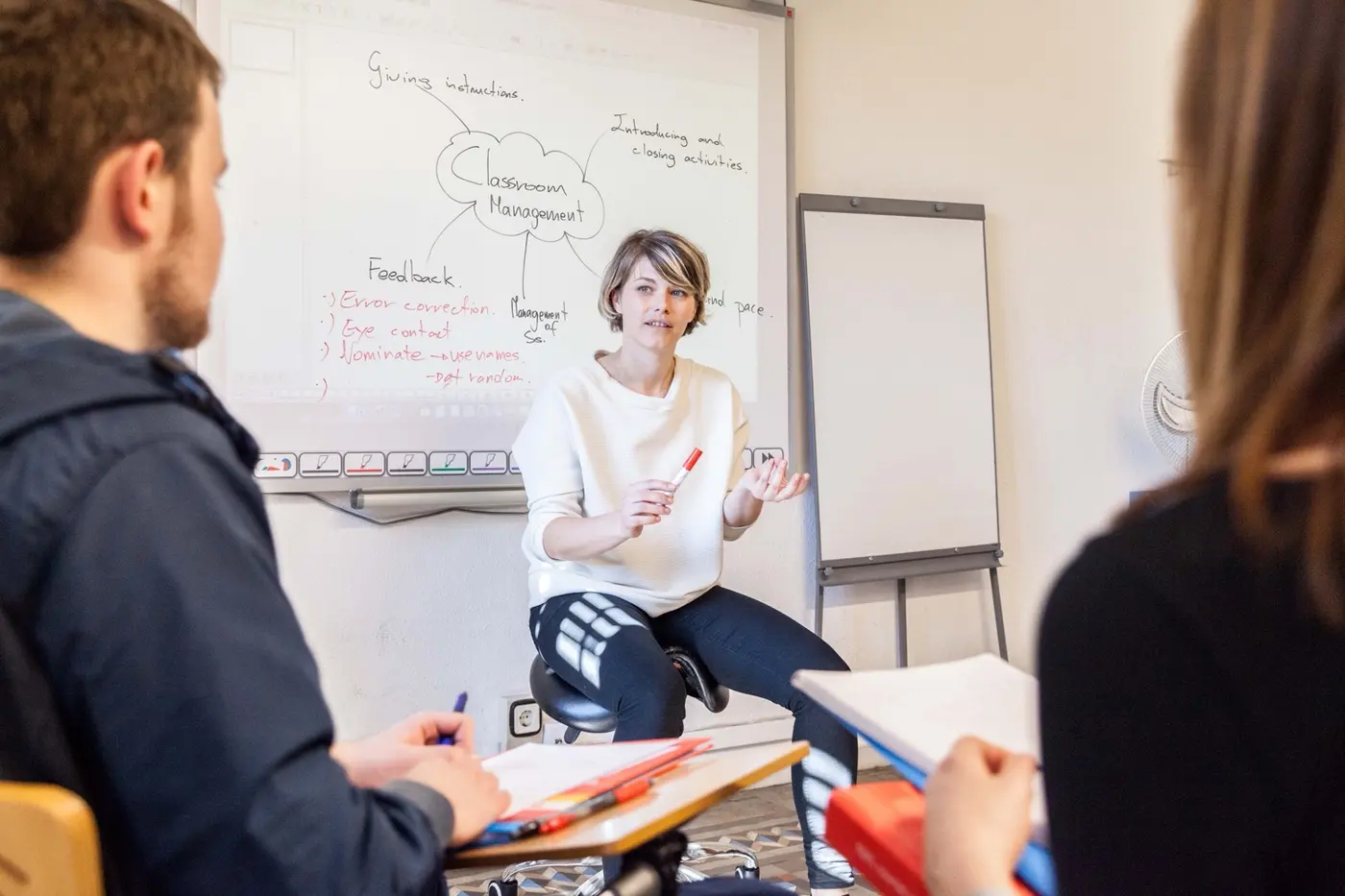
This course is intense, multitasking, and truly challenging. It demands effort, focus, and time. … The teachers are of the highest level, beyond university standards. … The best learning experience of my life.
Our trainers' advice for the course is to be patient with yourself:
“Take your time, and don't expect your first lesson to be a good one. In each teaching practice, focus on one small part of your teaching, and you'll see your skills improve over the four weeks.”
Your first timetable is likely to be split: a few hours in the late afternoon and evening, sometimes at different schools. It takes most teachers a term to build up to the hours they want. The paperwork takes patience too, from your visa to your NIE and your registration at the town hall (empadronamiento).
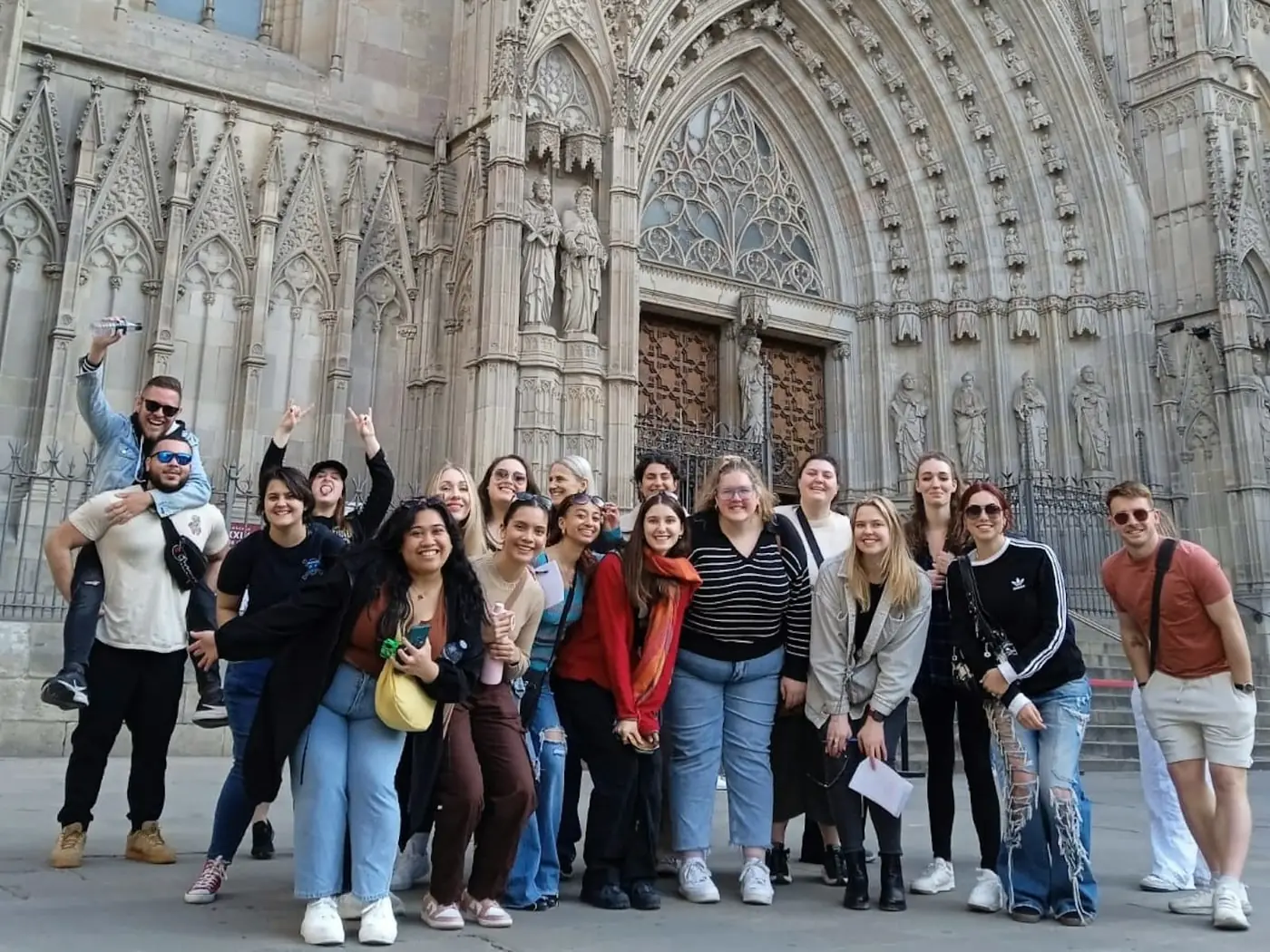
What makes it worth it is the life around the work. Each course group tends to become a group of friends, with its own WhatsApp group, nights out and weekend trips, and many of those friendships last long after the course.
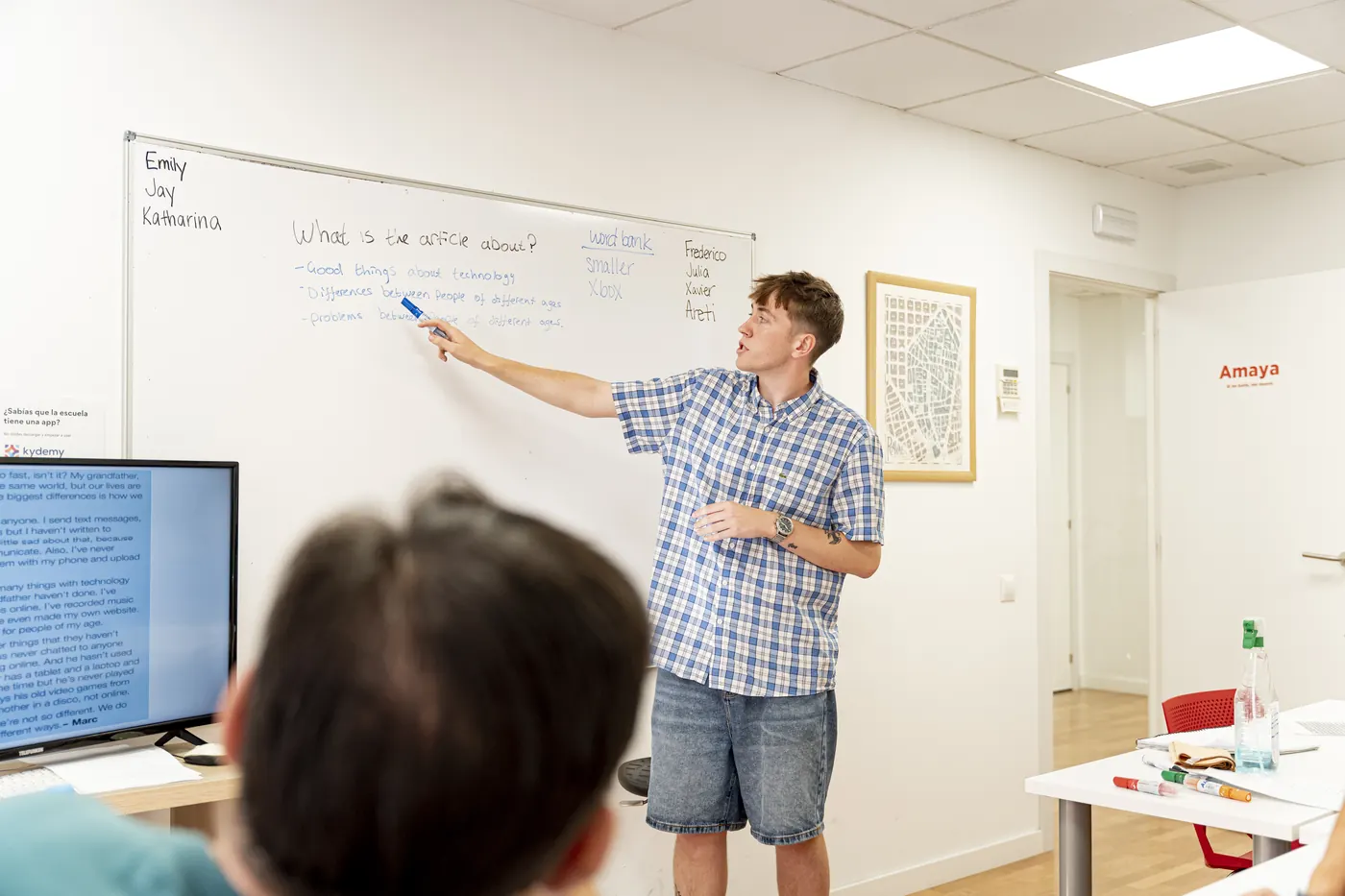
The staff and tutors at the school were amazing! They were so knowledgeable and supportive … All in all a truly unforgettable experience and it has given me the confidence to pursue a new career as a tutor.
Once you start working, the biggest change is that nobody plans your lessons for you.
“Set aside time to prepare your classes. It's the habit that makes the biggest difference in your first term.”

Step by step
Three to six months before
- Check which route your passport allows (see the table at the top).
- If you need a visa, choose your course and book your consulate appointment as early as you can.
- Gather documents: criminal record check, apostilles, translations, bank statements, insurance.
- Start saving: aim to cover your first two to three months.
Six to eight weeks before
- Apply for your visa, if you need one.
- Arrange somewhere to live for your first month.
- Prepare your CV and a professional photo.
Your first month
- Complete your course.
- Register your address at the town hall (empadronamiento) and start your NIE or TIE paperwork.
- Go to the job-finding workshop and start applying, ideally timed for September or January.
Your first term
- Build up your timetable, add private students once you're settled, and keep in touch with your course group.
Frequently asked questions
Can Americans teach English in Spain?
Yes. The two most common routes are a student visa with a Spanish course and the NALCAP language assistant programme, which needs a degree and an application many months ahead. Americans are the largest group among our visa trainees.
Can I teach English in Spain without a degree?
Yes, at most private academies. A degree, or at least two years of university study, is needed for the language assistant programme, and international schools usually want one too, but academies care far more about a recognised teaching qualification and how you teach.
Do I need to speak Spanish?
No. Most academy lessons are taught in English. Some Spanish makes everyday life easier, and it helps with paperwork.
Can I teach English in Spain with no experience?
Yes. Academies hire newly qualified teachers all the time: more than 60 Barcelona schools have hired our graduates or asked us for teachers. What they look for is a recognised qualification with real teaching practice, which the CertTESOL includes, and a good demo lesson at interview.
Can non-native speakers teach English in Spain?
Yes. Schools want a very high level of English and a recognised qualification. About one in seven of our recent trainees came from countries where English isn't the main language, and they work in Barcelona academies alongside native speakers.
How much do English teachers earn in Barcelona?
Most new teachers earn €15 to €18 an hour before tax in academies, roughly €14 to €16 take-home, and €20 to €25 an hour for private classes. See what you'll earn.
Is the 4-week course enough to get a student visa?
No. A four-week course is too short for a long-stay student visa, so trainees who need a visa combine it with a longer programme of study.
Will a school sponsor my work visa?
It's very uncommon for a school to hire an English teacher from abroad and arrange a work visa. It's much more common to arrive with a student visa or a working holiday visa, after which a school can apply for authorisation for you to work.
Is NALCAP running in 2026-27?
Yes, but later than usual and without Madrid, Andalusia, Galicia or Murcia. Assistants start on 1 November 2026 and finish on 31 May 2027. The application window for 2027-28 hasn't been announced yet.
When is the best time to start?
Aim to be qualified and ready to work in early September or early January, when schools hire most.
Does TEFL Iberia guarantee a job?
No, and be wary of anyone who does. We give every graduate a job-finding workshop, a CV session and introductions to the schools that contact us, and we keep helping after the course.
How TEFL Iberia can help
TEFL Iberia is a Trinity College London accredited teacher training school in Barcelona. We've run the Trinity CertTESOL since 2012, trained more than 1,000 teachers from over 60 countries, and in 2024 moved into our own purpose-built school in the Eixample.
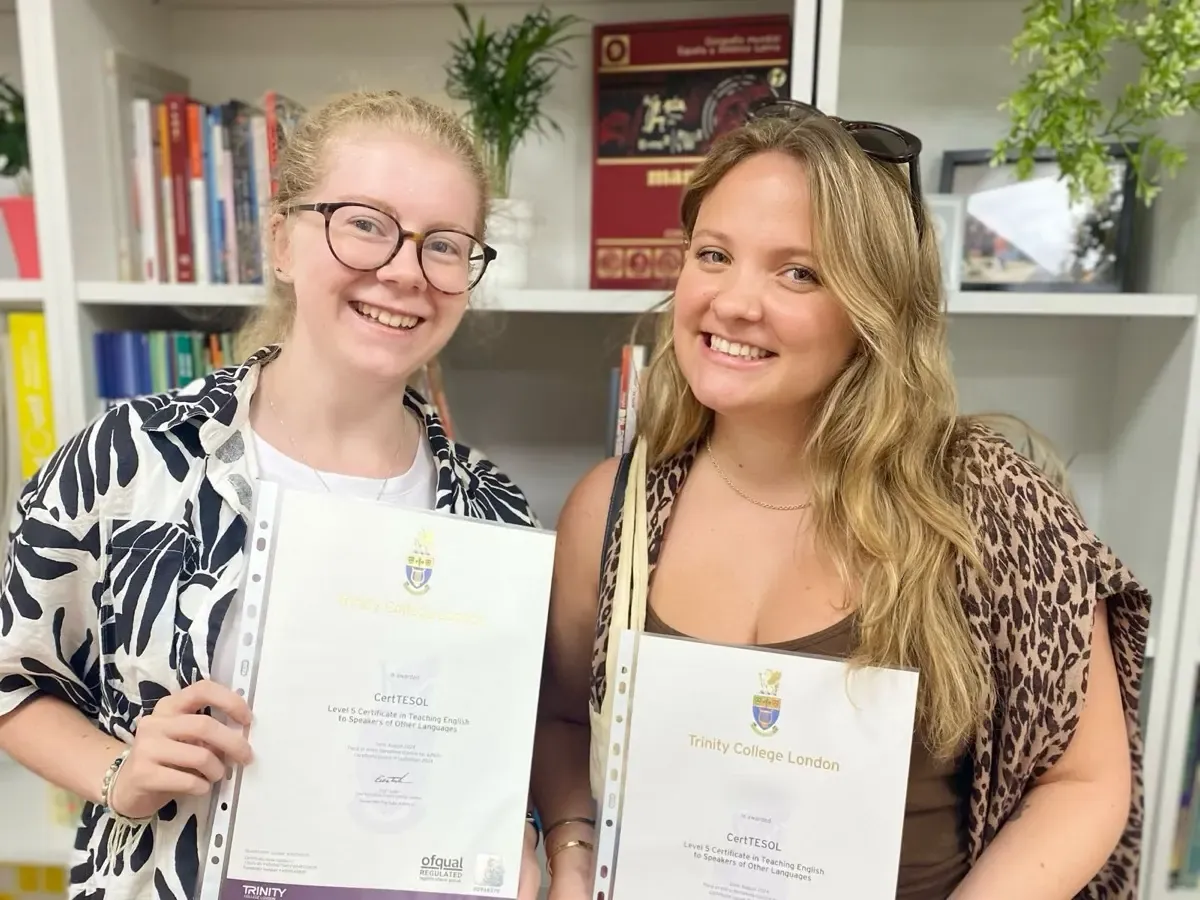
If you'd like to talk through which route suits you, or how the visa would work for your passport, we're happy to help. You can see our course dates, read about the CertTESOL and student visa programme, or get in touch and we'll reply personally.
Sources: TEFL Iberia job offers and visa records, October 2024 to October 2026; Spain's immigration regulation (opens in a new tab); the Ministry of Education's 2026-27 call for language assistants (opens in a new tab) and its conditions by region (opens in a new tab); youth mobility agreements with Canada (opens in a new tab), Australia (opens in a new tab) and New Zealand (opens in a new tab); Spain's 2026 minimum wage (opens in a new tab); the Catalan collective agreement (opens in a new tab) and the state agreement (opens in a new tab) for non-official teaching; room prices from idealista (opens in a new tab) and Fotocasa (opens in a new tab), 2026; pay from Indeed (opens in a new tab), October 2026.